

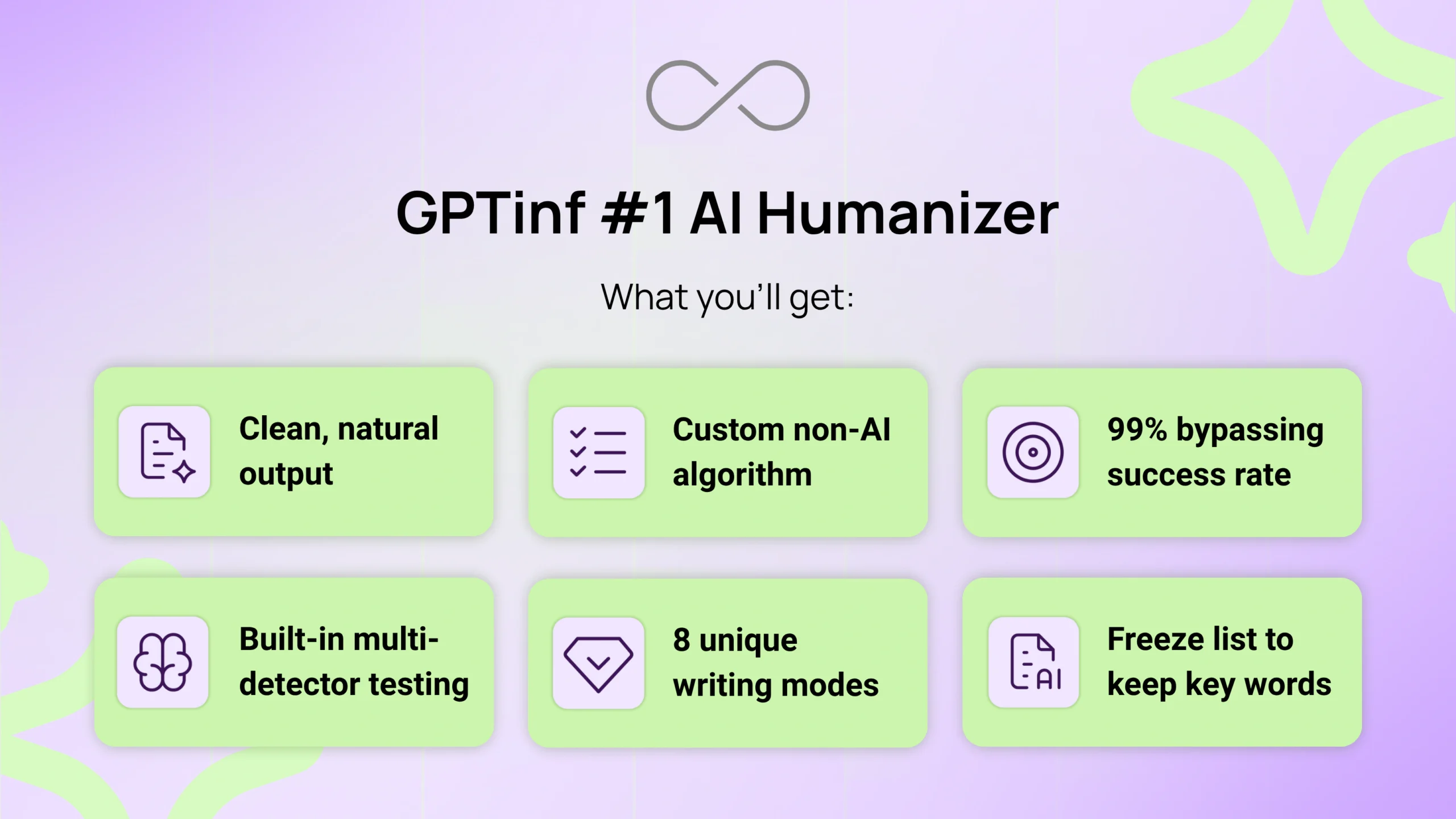
Content creation has fundamentally changed with the rise of artificial intelligence. While AI can generate text quickly, it often lacks the nuance and warmth of human writing. This is where an AI humanizer becomes an essential tool. An AI humanizer refines machine-generated text, transforming it into content that reads as if it were written by a person. By adjusting syntax, tone, and word choice, these tools help creators produce more relatable and authentic material that connects with audiences on a deeper level.
This article explores the world of the AI humanizer. We will explain what it is, how the technology functions, and the significant benefits it offers to writers, marketers, and businesses. You will also discover its practical applications across different industries.
Understanding the AI Humanizer
An AI humanizer is a specialized tool designed to convert text generated by artificial intelligence into content that sounds natural and human-like. AI writing tools are trained on massive datasets, but they can sometimes produce text that feels robotic, repetitive, or devoid of personality. An AI humanizer addresses this gap by rewriting the content to bypass AI detection systems and, more importantly, to resonate with human readers.
The core purpose is to polish the rough edges of AI-generated drafts. It analyzes the text for common AI patterns, such as predictable sentence structures and unnatural phrasing. Then, it applies sophisticated algorithms to introduce variability, improve flow, and inject a more conversational tone, making the final output indistinguishable from human writing.
How Does an AI Humanizer Function?
The technology behind an AI humanizer is a complex blend of natural language processing (NLP), machine learning models, and advanced algorithms. These components work together to analyze and reconstruct text on multiple levels.
First, the tool examines the input text for tell-tale signs of AI generation. This includes evaluating sentence length variation, word choice complexity, and overall stylistic patterns. AI models often fall into predictable habits, which these tools are trained to identify.
Next, the AI humanizer uses its own algorithms to rephrase sentences and restructure paragraphs. This is more than just swapping out words with synonyms. It involves changing sentence structures, combining short sentences for better flow, and breaking up long ones for clarity. The goal is to create a rhythm that feels natural to a human reader.
Finally, the tool refines the tone and style. It can adjust the text to be more formal, casual, persuasive, or empathetic, depending on the desired outcome. This contextual understanding allows the AI humanizer to produce content that is not only grammatically correct but also emotionally resonant.
Key Benefits of Using an AI Humanizer
Integrating an AI humanizer into your content workflow provides several powerful advantages. It helps creators save time, improve quality, and enhance their connection with their audience.
Improve Content Authenticity
The primary benefit is the enhanced authenticity of your content. An AI humanizer removes the robotic feel from AI-generated text, making it more engaging and trustworthy. Readers are more likely to connect with content that feels genuine and speaks to them in a relatable voice. This authenticity builds credibility for your brand or publication.
Save Time and Boost Efficiency
Editing AI-generated drafts can be a time-consuming process. Manually rewriting text to sound more human requires significant effort. An AI humanizer automates this task, allowing you to refine large volumes of content in a fraction of the time. This efficiency frees up writers and editors to focus on higher-level tasks like strategy, research, and creative ideation.
Overcome AI Detection
Many platforms, from academic institutions to search engines, use AI detection tools to identify machine-generated content. While the ethics and rules are still evolving, some organizations penalize or filter content identified as AI-written. An AI humanizer helps your content bypass these detectors by making it stylistically human, ensuring it reaches its intended audience without issue.
Enhance SEO Performance
Search engines prioritize high-quality, valuable, and user-friendly content. Text that is difficult to read or sounds unnatural can lead to higher bounce rates, signaling to search engines that the content is not helpful. By improving the readability and flow of your articles, an AI humanizer can contribute to better user engagement metrics, which positively impacts your search engine optimization (SEO) efforts.
Practical Applications in Various Industries
The versatility of the AI humanizer makes it valuable across numerous fields. Professionals in different sectors use this technology to streamline their communication and content production.
Marketing and Advertising
Marketers use AI humanizers to refine ad copy, email newsletters, social media posts, and blog articles. These tools ensure that all marketing communications maintain a consistent and relatable brand voice, helping to build stronger customer relationships and drive conversions.
Academia and Research
Students and researchers can use an AI humanizer to polish their papers, essays, and reports. It helps improve the clarity and flow of complex information, making academic writing more accessible and readable without altering the core facts or arguments. This ensures their work is communicated effectively.
E-commerce and Retail
In e-commerce, product descriptions and customer reviews play a crucial role in the buying decision. An AI humanizer can help create persuasive and natural-sounding product descriptions that connect with shoppers. It can also be used to standardize the tone of customer service responses, ensuring a positive brand experience.
The Future of Content Creation
The AI humanizer is more than just an editing tool; it represents a new step in the collaboration between humans and artificial intelligence. It empowers creators to leverage the speed and scale of AI without sacrificing the quality and authenticity that only a human touch can provide. As AI continues to evolve, these tools will become even more sophisticated, further blurring the line between human and machine-generated text. By embracing this technology, you can stay ahead of the curve and produce superior content that truly connects with your audience.

My name is Michael Scaife, and I’ve been working for 4 years as a content analyst. I help people find out if online words or trends are fake, confusing, or just made for marketing. I look at strange or new keywords and check if they are real or just made up to get attention. My goal is to make the internet clearer, safer, and more honest for everyone. I enjoy teaching people how to spot fake ideas online and avoid being tricked by bad or misleading content.