
Artificial intelligence changed the classroom almost overnight. Students suddenly had access to tools that could write essays in seconds, leaving educators scrambling to verify the authenticity of submitted work. This shift brought a new necessity to the academic world: AI detection.
At the forefront of this technology stands the Turnitin AI detector. While many schools already use Turnitin for plagiarism checking, its new AI capabilities have raised important questions. Can it truly tell the difference between human and machine? How does it actually work? This guide breaks down everything educators and students need to understand about this powerful tool.
What Is the Turnitin AI Detector?
The Turnitin AI detector is a specialized feature integrated into the standard Turnitin feedback and similarity report. Unlike traditional plagiarism detection, which searches for matching text across the internet and databases, this tool analyzes writing style and sentence structure.
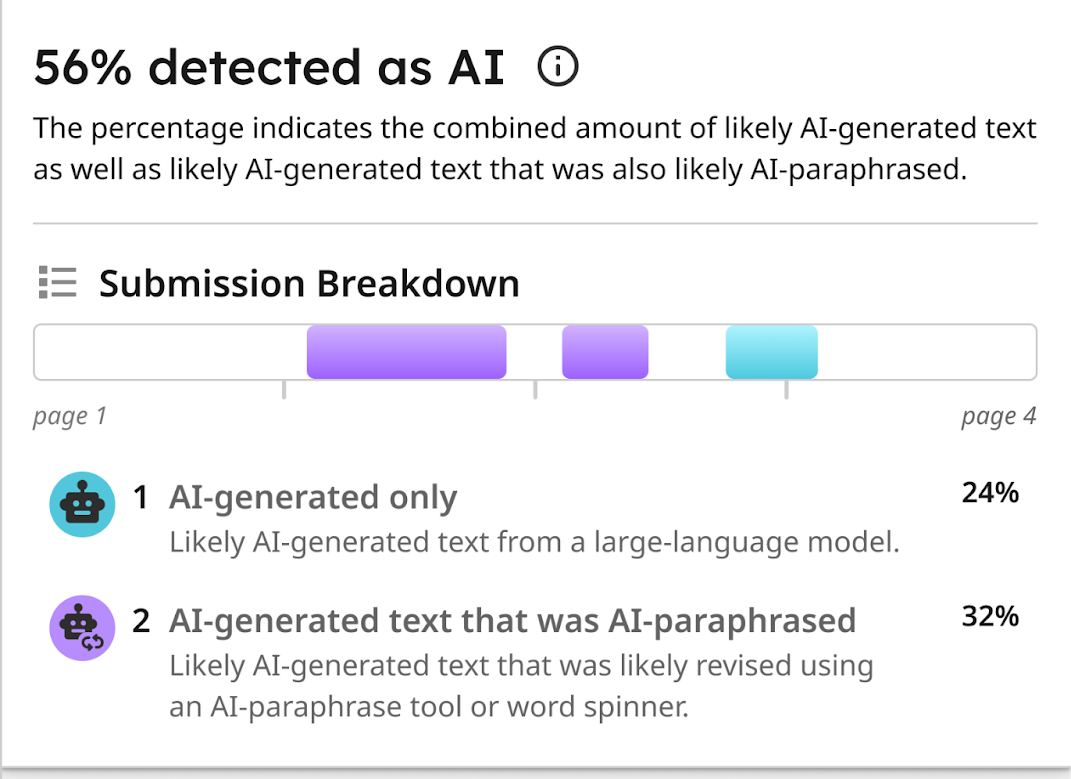
Turnitin built this technology specifically for academic environments. It aims to help teachers identify when a student uses generative AI tools—such as ChatGPT, Google Gemini, or various paraphrasing bots—to complete assignments. It provides an “AI writing indicator,” which shows the percentage of the document that the system believes was generated by AI.
How the Technology Works behind the Scenes
Understanding the mechanics helps in interpreting the results. The Turnitin AI detector operates by analyzing specific patterns that large language models (LLMs) tend to leave behind.
Recognizing Predictable Patterns
Generative AI writes by predicting the next most likely word in a sentence. This often results in highly consistent, predictable, and average sentence structures. Human writing, by contrast, is often chaotic. We use unusual word choices, vary our sentence lengths drastically, and make stylistic choices that machines rarely replicate.
Analyzing Perplexity and Burstiness
The software evaluates text based on two main concepts:
- Perplexity gauges how unexpected or unpredictable the text is to the model. Low perplexity suggests the text is predictable (likely AI). High perplexity suggests the text is complex and varied (likely human).
- Burstiness: This looks at changes in sentence structure and length. Humans write with “bursts” of creativity and variation. AI tends to be more monotonic.
When you submit a paper, the detector breaks the submission into segments. It assigns a score to each segment based on how likely it is to be AI-generated, then aggregates these scores into an overall percentage.
Benefits for Academic Integrity
The rapid adoption of the Turnitin AI detector offers several advantages for maintaining standards in education.
Upholding Fairness
Students who spend hours researching and writing their own papers deserve fair assessment. If peers use AI shortcuts without consequence, it devalues the hard work of honest students. This tool helps level the playing field.
Sparking Important Conversations
The tool isn’t just about catching cheaters; it’s a diagnostic aid. A high AI score alerts an instructor that a student might not have mastered the material. This allows the teacher to intervene, discuss the importance of critical thinking, and guide the student toward better writing habits.
Streamlined Workflow
Since the detector is built directly into the Turnitin dashboard, educators don’t need to copy-paste student essays into third-party websites. The analysis happens automatically alongside the standard similarity report, saving valuable time.
Limitations You Must Consider
While the technology is impressive, it is not perfect. Users must approach the Turnitin AI detector results with caution.
The Risk of False Positives
No AI detection software is 100% accurate. Turnitin has stated that their tool aims for a very low false positive rate (incorrectly flagging human work as AI), but it can still happen. Students who write in a very formulaic, simple, or repetitive style may sometimes trigger the detector accidentally.
The Problem with Mixed Sources
The detector can sometimes struggle with “mixed” content. If a student writes an original draft but uses a tool like Grammarly to heavily edit sentences, or uses AI to translate text from their native language, the detector might flag the final output. This creates a gray area regarding what constitutes academic dishonesty versus using legitimate writing aids.
It Is Not Proof
Turnitin emphasizes that the AI score is an indication, not definitive proof of misconduct. Educators should treat the percentage as data to inform their judgment, not as a final verdict.
Best Practices for Using the Results
Whether you are a teacher grading papers or a student reviewing your submission, context is key.
- Educators: Use the Turnitin AI detector report as a starting point. If a paper flags as 40% AI, compare the flagged sections to the student’s previous in-class writing. Ask the student to explain their thought process or define specific terms they used in the essay.
- Students: Focus on developing your unique voice. Avoid over-reliance on text spinners or heavy automated editing. If you use AI for brainstorming or outlining, ensure the final prose is entirely your own.
Conclusion
The Turnitin AI detector represents a significant step forward in preserving the value of academic writing. It provides educators with the data they need to ensure students are doing their own thinking. However, technology should never replace human judgment. By understanding both the capabilities and the limits of this tool, academic institutions can foster an environment that values originality and critical thought.

My name is Michael Scaife, and I’ve been working for 4 years as a content analyst. I help people find out if online words or trends are fake, confusing, or just made for marketing. I look at strange or new keywords and check if they are real or just made up to get attention. My goal is to make the internet clearer, safer, and more honest for everyone. I enjoy teaching people how to spot fake ideas online and avoid being tricked by bad or misleading content.